UCR Engineering Students Help Local Startup Advance Water Conservation Technology Through Student Capstone Project
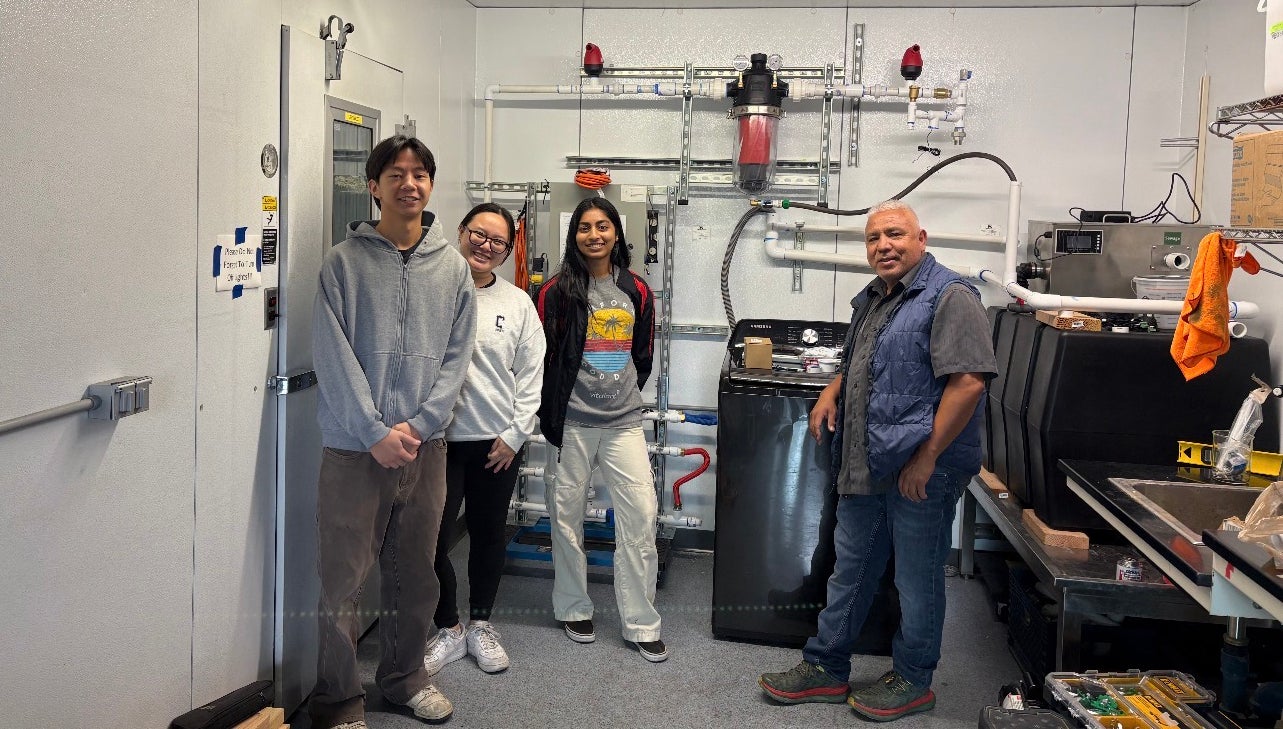
As California continues to prioritize water conservation, innovative solutions that make better use of existing resources are becoming increasingly important. This spring, a team of University of California, Riverside engineering students partnered with Riverside startup Laundry to Landscape to evaluate a technology designed to recycle laundry wastewater for landscape irrigation, generating technical data that will help guide the company's next stage of commercialization.
Founded by UCR School of Public Policy alumna Andrea Cuellar and her father, Miguel Cuellar, Laundry to Landscapes is developing an innovative filtration system that enables laundry wastewater to be safely reused for landscape irrigation, helping conserve water and reduce wastewater.
The company's first connection with UCR Innovation & Entrepreneurship came through the 2023 SoCal OASIS® Pitch Challenge, where it earned first place. The annual competition supports startups developing sustainable transportation, clean energy, water, agriculture, and circular economy technologies. As part of the broader SoCal OASIS® initiative, UCR Innovation & Entrepreneurship works with regional partners to accelerate sustainability-focused innovation through commercialization support, strategic partnerships, and funding opportunities. Unlike many startup competitions centered on venture capital investment, the SoCal OASIS Pitch Challenge is one of the few in the country offering significant non-dilutive funding, enabling founders to advance their technologies while retaining ownership of their companies.
As part of their senior capstone project, the engineering student team was tasked with evaluating Laundry to Landscape's prototype under real household conditions. Using conventional laundry products—including detergent, fabric softener, and bleach—the students measured how effectively the system removed physical debris and chemical contaminants while determining whether the treated water met California graywater regulations and Riverside County standards for subsurface irrigation.
The project unfolded in two phases. Students first developed the testing methodology and installed the prototype before conducting a series of experiments under four different washing conditions: water only, detergent, detergent with fabric softener, and detergent with bleach. Throughout the process, they analyzed multiple water quality indicators, including suspended solids, organic oxygen demand, acidity, soap residue, chlorine, and dissolved salts.
Their findings demonstrated that the treated water met key health and safety standards for outdoor reuse. Beyond validating the technology's performance, the students also identified opportunities to further improve the filtration system, providing recommendations that could increase contaminant removal efficiency to as high as 90–95%.
The collaboration extended well beyond laboratory testing. The team also completed an environmental impact assessment that quantified potential water savings and carbon emissions reductions, conducted a cost-recovery analysis to evaluate the system's economic viability, and identified potential deployment opportunities throughout Riverside, including multifamily housing, hotels, and hospitals.
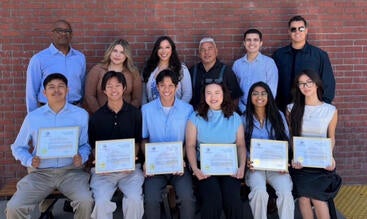
For Cuellar, the partnership provided technical resources that would have been difficult for an early-stage startup to access independently. "Programs like this give students real-world problems to solve while giving small startups like ours access to the kind of rigorous testing, resources, and analysis we couldn't do alone," said Cuellar. "We hope innovative programs and partnerships like this continue because it's a win for the students, for local businesses, and the community."
The experience also gave students the opportunity to apply their classroom knowledge in a real-world commercialization setting. They gained hands-on experience installing prototypes, designing testing protocols, operating laboratory equipment, validating experimental data, and translating technical findings into actionable business recommendations. Along the way, they became familiar with environmental regulations, life-cycle assessment, cost-benefit analysis, mapping tools, and water quality monitoring.
According to Cuellar, one of the most rewarding aspects of the collaboration was watching the students embrace the challenges of working on an emerging technology. "They were always willing to learn, genuinely curious about the 'why' behind every result, and consistently flexible and solution-oriented whenever something didn't go as planned," she said. "They tackled every challenge as a team, and that mindset made them a pleasure to work with from start to finish."
One example came when two promising test results were traced back to faulty testing kits. Rather than accepting favorable data, the team took the time to identify the issue, repeat the testing, and ensure the results accurately reflected the system's performance.
The collaboration reflects the mission of UCR Innovation & Entrepreneurship to help researchers, students, and entrepreneurs transform innovative ideas into real-world impact. Through commercialization programs, startup support, experiential learning, and regional initiatives like SoCal OASIS®, UCR continues to strengthen Inland Southern California's innovation ecosystem while preparing the next generation of entrepreneurs.
Learn more about UCR Innovation & Entrepreneurship and its commercialization programs at innovation.ucr.edu.